
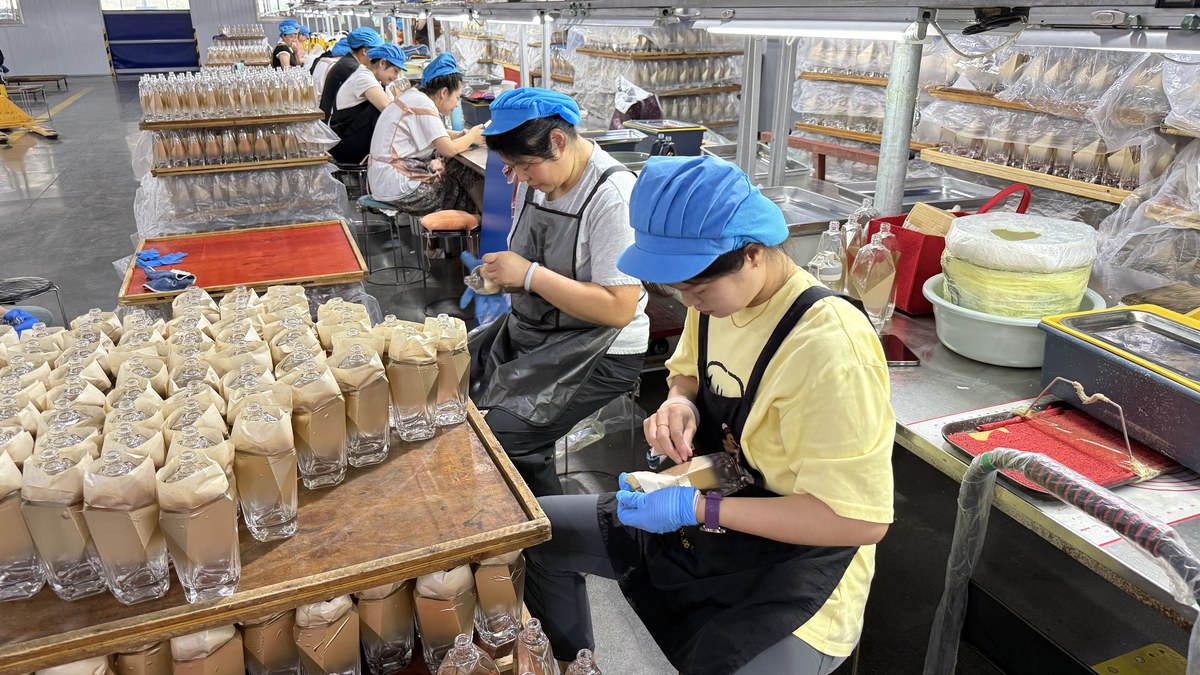
Heinz Glas has sold its 43.2% stake in an Indian flacon joint venture to Haldyn Glass, putting a 105 tpd premium perfume bottle plant under local control.
A share purchase agreement filed with the Bombay Stock Exchange on 25 November will not move many prices. Haldyn Glass Limited, a commercial glass packaging manufacturer based in Gujarat, bought Heinz Glas International's entire 43.2% holding in their joint venture, Haldyn Heinz Fine Glass Private Limited, making the company a wholly owned subsidiary.
The transaction is small in financial terms and large in what it says about where premium small-format glass is going to be made. A German glassmaker with a family history dating to 1622 has handed full control of an Indian flacon plant to its local partner, and the plant it is handing over already runs at a 19% EBITDA margin.
What changed hands
The joint venture was set up in 2015 to serve demand for premium small-format glass containers across cosmetics, skincare, mass and masstige perfumery, and home fragrance. It operates a 105 tonne-per-day furnace at Kosamba in Gujarat with integrated decoration capability, and supplies brands in the United States, Europe and India.
The numbers disclosed with the announcement give a clearer picture than the deal value, which was not published:
- Revenue from operations of INR 123.18 crore in the first half of FY27
- EBITDA of INR 23.25 crore, a margin of 19%
- Profit after tax of INR 6.63 crore
A 19% EBITDA margin in a business making small decorative bottles is a respectable number. It sits well above what the large container producers are currently earning on commodity wine and beer bottles in Europe, where one major manufacturer reported a 0.3% segment margin last quarter. Small format and decoration carry pricing power that tonnage does not.
Two details suggest this is a handover rather than an exit. HHFG keeps its existing business, manufacturing facility and customer relationships, and Heinz Glas will continue to provide marketing support for a further two years to smooth the transition with its international clientele. The German company is stepping back from ownership, not from the customer relationship, at least not immediately.
Why a 403-year-old glassmaker would sell
Heinz Glas describes itself as 403 years young, tracing its founding to 1622, and its reputation rests on high-end glass flacons for luxury beauty. A company with that history does not sell a profitable stake by accident, and it is worth being precise about what it is giving up.
It is giving up equity in a plant that was built to combine its technical know-how and product development with Haldyn's manufacturing base and Indian market access. What it keeps is the two-year marketing bridge and, presumably, the option to supply its global clients from German capacity rather than Indian capacity. That is a common pattern in premium glass: the brand-facing design and development work stays close to the luxury customers in Europe, while the volume manufacturing migrates to where the growth and the cost base are.
Haldyn's stated rationale is premiumisation — moving toward higher-value products rather than competing on tonnes. Buying out a partner that brought flacon expertise is a direct way to acquire capability that would otherwise take years to develop.
The demand structure behind the deal
What makes the timing interesting is the shape of fragrance demand rather than its size.
Global Market Insights forecasts the overall fragrance market growing from USD 64.1 billion in 2026 to USD 85.5 billion by 2035, a compound rate of about 3.3%. The niche and artisanal segment is forecast to grow at roughly 7.9% over the same period — more than twice the rate of the total market. That gap is the whole story.
Mass-market licensed fragrances buy bottles in the hundreds of thousands per SKU, in a handful of shapes, and negotiate hard on unit price. Niche fragrance houses buy in the tens of thousands, want a distinctive mould, and care far more about decoration quality and short lead times than about the last cent on the bottle. The two businesses reward completely different factories.
The corporate activity in 2026 reflects the same shift. L'Oréal has absorbed Creed and several prestige fragrance licences; LVMH has bought BDK Parfums and EX NIHILO and consolidated oversight into a dedicated fragrance brands division; Puig has been in late-stage talks to acquire Parfums de Marly, a niche house whose sales grew 42% in its most recent fiscal year to more than USD 780 million. When the growth sits in niche, the packaging that niche buys becomes the growth market.
Why small-format premium is a different business
A 50 ml perfume bottle looks like a smaller version of a 750 ml wine bottle. Operationally it is a different product.
Weight is a design feature, not a cost. Premium fragrance bottles are deliberately heavy at the base — the thick glass punt and walls create the in-hand weight that signals value. This runs directly against the lightweighting logic that governs wine, beer and spirits containers, where every gram removed saves transport cost and material. A flacon specification that calls for a heavy base cannot be light-weighted without destroying the product's premise.
The neck is a precision interface. Fragrance packaging uses small-diameter finishes, either crimp (where the pump is mechanically swaged onto the bottle) or fine-thread screw. The pump, collar and cap are separate purchased components with their own tolerances, and a mismatch in neck finish shows up as leakage, a loose collar or a cap that will not sit flush. Dimensional control at the neck matters far more than on a wide-mouth jar. Our closures guide covers the interface logic that applies across categories.
Decoration is where the value is added. Frosting, spray coating, screen printing, hot stamping, metallisation and laser engraving are separate processes, often run on separate lines, each with its own reject rate. A bottle that leaves the furnace perfectly formed can still fail at the decoration stage, and the cost of that failure is the whole accumulated value of the bottle plus the decoration. Our custom bottle workflow guide sets out where these steps sit in a project timeline.
Mould cost dominates small orders. A bespoke flacon needs a bespoke mould, and at 30,000 or 50,000 pieces the mould is a significant share of the unit price. This is why suppliers who own mould-making capacity, and who can amortise a mould across several orders for the same client, win niche business over suppliers who cannot. The economics are set out in our MOQ guide.
A 105 tpd furnace is well suited to this. It is small enough to run several short campaigns a year without drowning in changeover cost, and large enough to serve a global client list. It is not the right plant for a million-unit order at a commodity price — and that is precisely the segment that is under pressure in Europe right now, as covered in our report on European capacity closures.
What this means for buyers
Three practical points for anyone specifying small-format premium glass:
- The supply map has more dots on it than it did five years ago. Capacity for decorated small-format bottles now exists at scale in India, China and Southeast Asia, not only in Germany, France and Italy. For a niche brand, that widens the field considerably — and it changes the benchmark price.
- Ask who owns the mould. When a joint venture changes hands, the question of which party holds the mould for a given customer's bottle becomes commercial rather than technical. Confirm in writing that the tooling for your SKU is owned by, or exclusively reserved to, your supplier and stays with them through any ownership change.
- Qualify decoration separately from forming. Ask for the reject rate at each decoration step, not just the overall AQL. A supplier with excellent forming and mediocre hot stamping will still cost you money, and the two problems need different fixes.
For brands looking at miniature spirits rather than fragrance, the same logic applies with a different finish: the miniature spirits bottle range covers small formats where the closure and label area, not the glass weight, carry most of the specification risk. And if the product is light-sensitive, the colour guide explains what each glass colour actually blocks.
The quiet redistribution
Nothing about this transaction is dramatic. No plant closes, no workers are made redundant, no regulator is involved. A joint venture becomes a subsidiary, a partner extends marketing support for two years, and a mid-sized Indian manufacturer adds flacon capability to its portfolio.
But it belongs to the same movement as the louder stories of 2026: container glass capacity in Europe contracting, cullet supply becoming contested, and premium small-format production consolidating in Asia. The pattern is consistent. Commodity tonnage is leaving high-cost regions, while the higher-value, decoration-heavy, short-run work is moving toward manufacturers who can combine flexible furnaces with in-house decoration and tooling.
For buyers, the useful takeaway is not that Asian suppliers are now equal to European ones in luxury flacons — that is a claim each project has to test. It is that the number of credible sources has grown, and a specification that assumes a single region is now leaving options on the table.
Need Glass Bottles for Your Project?
Contact us for free quotes and professional advice.
Get a Free Quote →