
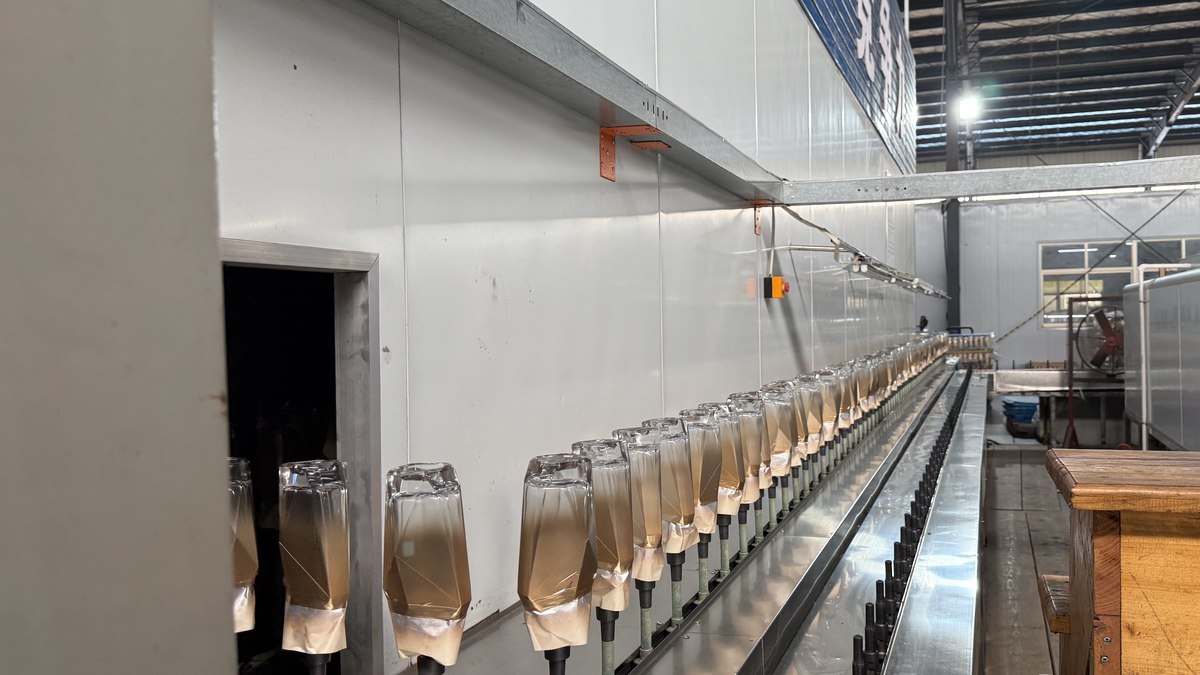
Stoelzle’s Czech furnace now handles 80% cullet, while Quebec fights over who gets 372 million wine bottles. Cullet supply, not sand, is now the constraint.
Two announcements six days apart, one in Czechia and one in Quebec, describe opposite ends of the same problem. A rebuilt furnace at Heřmanova Huť can now process up to 80% recycled glass. A deposit operator in Quebec wants to build its own plant to keep the cullet from 372 million wine and spirits bottles inside the province — and three existing processors are asking the government to stop it.
Neither story is really about furnaces. Both are about who controls clean, colour-sorted cullet, and how much of it actually ends up in the bottle a brand receives.
What Stoelzle actually restarted
Stoelzle Glass Group confirmed on 12 November that container production had resumed at its Heřmanova Huť glassworks in the Czech Republic, following the rebuild of the site's amber glass furnace. The work ran from August to October 2026, inside a planned 65-day shutdown window. The first glass came out on 8 October, and all six production lines were running within two weeks.
The scope was broader than a like-for-like replacement. The end-port amber furnace was rebuilt completely, including its forehearths — the channels that carry molten glass from the furnace to the forming area — and its regenerators, which recover heat from exhaust gases. The melting area was enlarged, electrical boosting capacity was doubled, and the glass distribution, forming, inspection and packaging equipment was upgraded as well.
Two details in that list matter more than they look. Electrical boosting is supplementary electric heating inside the melter; doubling it does not mean the furnace now runs on electricity alone, but it does give the plant a second lever to hold melting conditions steady when the batch changes. And the regenerators are the reason a furnace can be economical at all — they preheat combustion air using waste heat, so their condition sets a floor on specific energy consumption.
Stoelzle also described how it protected supply during the shutdown: inventory was built ahead of time, and selected standard products were made at the group's Köflach plant in Austria. The site, established in 1907 and employing around 240 people, supplies amber glass primarily to pharmaceutical and healthcare customers, with some food and beverage and miniature spirits work as well. It operates under ISO 15378, ISO 9001, ISO 14001, ISO 45001 and ISO 50001.
“Up to 80%” is not “80% in your bottle”
This is the part most trade coverage skips, and it is the part buyers need.
Stoelzle's figure describes the furnace's upper processing capability, not the recycled content of every container leaving the plant. The cullet share in any given campaign depends on the quality of cullet available, the product specification being run, the operating conditions that day, and the batch recipe the plant has settled on.
The company was explicit about the constraint. “Increasing cullet content requires careful control of raw material quality and melting conditions to maintain consistent glass properties,” a spokesperson told Packaging Insights. That sentence is the whole argument in miniature: cullet is not a drop-in substitute. It is a raw material with its own variability, and the more of it you use, the more that variability has to be engineered out upstream.
So when a supplier quotes a recycled-content ceiling, the useful follow-up question is not “can you reach it?” but “what percentage did the last three production runs for a customer like me actually contain, and can you document it per batch?” Those are different questions, and only one of them is answered by a capability figure.
Why pharmaceutical glass is the hard case
It is not an accident that the 80% figure arrived on an amber pharmaceutical furnace rather than a flint container line.
Pharmaceutical glass is specified by performance, not appearance. Hydrolytic resistance, dimensional control and colour consistency have to hold batch after batch, because the container is part of a validated drug packaging system under ISO 15378 good manufacturing practice. A shift in the redox state of the melt changes the colour of an amber bottle; a shift in the batch changes how the glass resists water attack at the inner surface.
Cullet introduces exactly those variables. Post-consumer and post-industrial cullet arrives with different compositions, different levels of ceramic and metal contamination, and — critically — different colours mixed together. Melting a higher proportion of it means the plant has to compensate with tighter incoming inspection, more precise batch weighing and a more stable thermal profile. That is what the doubled electrical boosting and the enlarged melting area buy: headroom to absorb variability without losing the specification.
For buyers in pharma and healthcare, the practical implication is that high recycled content and tight specification are not in conflict — but the supplier has to have invested in the equipment to hold both. A furnace that can theoretically take 80% cullet is evidence of that investment. A certificate stating 80% content on a specific delivery is a different document, and you should ask for it.
Quebec wants the cullet for itself
Fifteen hundred kilometres west and a policy layer away, the same material is being fought over from the other direction.
Quebec's deposit-refund system, operated under the Consignaction brand by the provincial beverage container recycling association, expands on 1 March 2027. From that date, glass beverage bottles from 100 ml to 2 litres join the programme, with a 25-cent refund per container. The addition brings an estimated 372 million wine and spirits bottles into the system, and roughly 553 million glass containers in total.
That volume has to go somewhere. Consignaction expects to manage about 125,000 tonnes of glass from 2027, rising to 175,000 tonnes a year. In October it announced a CAD 60 million processing plant in Sorel-Tracy, with Quebec equipment maker Machinex as supplier and technology integrator, working with Binder+Co on optical sorting. The plant's purpose is not collection but upgrading: cleaning cullet and sorting it by colour to a purity that allows remelting into new containers.
Regulation sets the bar. Under the rules, 50% of the recovered glass must be reused to manufacture bottles — a bottle-to-bottle loop, not downcycling into insulation or road aggregate. That single requirement explains the capital cost. Mixed-colour cullet cannot make a flint bottle; only well-separated, low-contamination fractions can. Consignaction says optical sorting at the required scale, including AI-assisted units, does not currently exist in the province.
The fight is about tonnage, not technology
Three Quebec glass processors disagree with the premise, and in mid-November they asked the new provincial government to pause the project.
Their argument is capacity. The existing processors — including Groupe Bellemare in Trois-Rivières and 2M Ressources in Saint-Jean-sur-Richelieu — say their combined throughput reaches about 355,000 tonnes, well above the 175,000 tonnes Consignaction projects. The alliance says more than 500 jobs are at stake, and wants the government to review existing capacity before a publicly mandated operator builds its own.
“Glass has become a hot commodity, everyone wants to get their hands on it,” Bellemare president Serge Bellemare told Radio-Canada. “If there isn't enough volume, the plant simply closes.” His company has put CAD 20 million into its Trois-Rivières plant in recent years, CAD 4.5 million of it an interest-free loan from Investissement Québec. 2M Ressources president Michel Marquis warned of layoffs or closure under the current direction.
Consignaction does not accept the assessment. Vice-president Jean-François Lefort told Radio-Canada that the existing processors lack the capability and the investment needed to hit regulatory targets. The operator's position rests on a Deloitte analysis it has declined to publish, which the processors say they were not consulted on. The provincial government is amending rules to require Consignaction to consider existing operators before building.
Who pays is the second front. The deposit system's projected cost for 2027 is CAD 450 million, up 45% from CAD 308 million, with half — CAD 225 million — shifted to producers under extended producer responsibility. Non-refundable eco-fees rise alongside: single-use glass containers under 500 ml go from 4 to 8 cents, and those over 500 ml from 4 to 13 cents. Consignaction says only a marginal share of the increase finances the plant, roughly one cent per container on the small-format fee.
The plant is expected to start up in early 2028 — close to a year after the deposit expansion takes effect, which means the first year of wine and spirits bottle collection will run on existing capacity regardless of how the dispute resolves.
The common thread: colour decides availability
Put the two stories together and a pattern appears that neither announcement states on its own.
Glass is collected mixed. What limits recycled content is not collection volume but colour separation, because a flint bottle needs cullet that is close to colourless with very low contamination, and that fraction is scarce. Amber and dark green tolerate a much wider range of input, including darker fragments, so their cullet streams can carry a higher share of recovered material before quality degrades.
That explains why the 80% capability landed on an amber furnace and not a flint one, and it explains why Quebec is spending CAD 60 million on optical sorting rather than on more collection bins. Both are responses to the same bottleneck, and both point the same way for procurement: colour choice is a materials strategy, not only a branding one. As we set out in the glass bottle colour guide, darker glass also blocks more ultraviolet and visible light — which matters if the product is oil, spirits or anything else that degrades under light.
The economics reinforce it. Because cullet melts at a lower temperature than virgin batch, a higher cullet share means less energy per tonne melted — and in a carbon market that prices energy, less energy means fewer allowances to surrender. That is the mechanism behind the EU carbon allowance deal and behind the broader direction of recycled content and EPR rules: recycled content has moved from a marketing claim to a cost and compliance variable.
What is new in these two November stories is the physical layer underneath all of that. Policy can demand recycled content, and carbon pricing can reward it, but neither can manufacture clean amber cullet where the collection system does not produce it. That is now the binding constraint, and it is being contested by furnace operators and waste authorities at the same time.
What this changes for buyers
Five practical adjustments, in the order they are likely to matter:
- Ask for achieved content, not capability. A furnace rated for 80% cullet and a delivery containing 30% are both consistent with the same press release. Put the achieved figure and the per-batch documentation into the specification, and require it on the certificate of analysis rather than in a brochure.
- Treat colour as a sourcing decision. If the brand can live with amber or dark green, the pool of compliant cullet widens considerably and the price and lead time usually improve with it. Flint is the constrained case, and it is priced accordingly.
- Plan for furnace downtime. Rebuilds are routine: this one took 65 days and was covered by pre-built inventory and a sister plant in another country. Ask any supplier what their continuity plan is, and whether your SKUs are among the products they can make elsewhere.
- Track deposit expansion in your markets. When a jurisdiction adds wine and spirits bottles to a deposit system, cullet that previously went to aggregate or landfill gets redirected to bottle-to-bottle use. That shifts availability for everyone else, including exporters buying from the same regional glass industry.
- Keep the compliance file current. Higher recycled content changes the evidence trail — you need batch traceability and, for food and pharmaceutical contact, documented conformity. Our guide to glass food contact compliance covers what that file should contain.
Where this leaves the bottle
The two announcements will be read in most trade newsletters as a sustainability story and a local politics story. They are better read as one supply story.
Europe's container glass sector is simultaneously investing in cullet capability and adjusting capacity to weaker demand — the German glass industry association has been pressing policymakers on exactly this combination. North America is building sorting infrastructure to meet reuse mandates that did not exist five years ago. In both places, the scarce input is no longer sand, soda ash or gas. It is clean, single-colour, contaminant-free cullet, and the plants that can secure it will be the ones able to offer high recycled content at a stable price.
For brands and importers, that argues for asking harder questions earlier in the specification process, and for treating the recycled-content number on a datasheet as a ceiling rather than a fact. The container on the shelf is the only number that counts.
If you are specifying amber or dark green containers for spirits, pharmaceutical or food use, our spirits bottle range and wine bottle range list the formats and neck finishes available, and the closures section covers the caps and corks that match them. For colour and light-protection trade-offs in oil and other sensitive products, the olive oil bottle guide goes deeper, and how bottle prices are built explains where cullet cost sits in the quote.
Need Glass Bottles for Your Project?
Contact us for free quotes and professional advice.
Get a Free Quote →